
The Story Many Businesses Tell
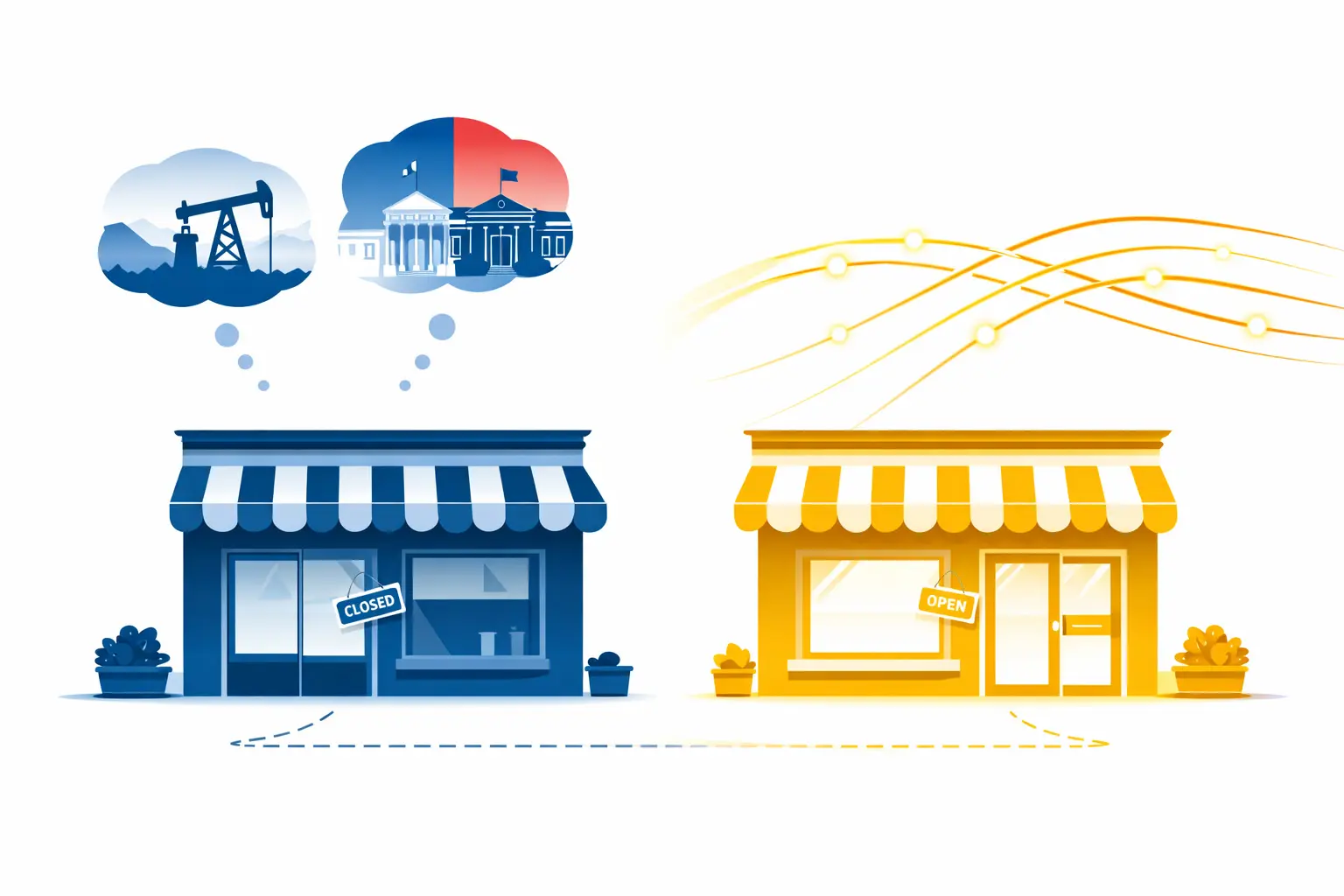 Over the years, I’ve had countless conversations with
business owners throughout Farmington and the broader Four Corners region.
Often, those conversations started because I noticed something in their
business that could be improved – gaps in their marketing, unclear positioning,
or operational strategies that were working against them.
Over the years, I’ve had countless conversations with
business owners throughout Farmington and the broader Four Corners region.
Often, those conversations started because I noticed something in their
business that could be improved – gaps in their marketing, unclear positioning,
or operational strategies that were working against them.
When I brought those observations up, the responses were surprisingly consistent.
Many owners believed their struggles had little to do with strategy or marketing. Instead, they pointed to two external factors they believed were holding them back:
- the downturn in oil and gas activity
- national politics or whichever party happened to be in the White House
To be fair, those concerns aren’t completely unfounded. For decades, Farmington’s economy was closely tied to the energy industry, and shifts in oil and gas activity have historically affected businesses across the region.
But what always caught my attention was something else happening at the same time.
While some businesses were waiting for oil and gas activity to rebound – or for the next election to change things in Washington – their competitors were expanding. New locations were opening. Companies were hiring. Others were investing in their visibility, refining their strategy, and steadily growing under the same conditions.
That contrast raised an important question for me.
Were these businesses truly being held back by external forces, or were they simply missing the signals the market was already sending?
Because when you step back and start looking at those signals, the story of Farmington’s economy begins to look very different.
Looking at the Signals Instead of the Narrative
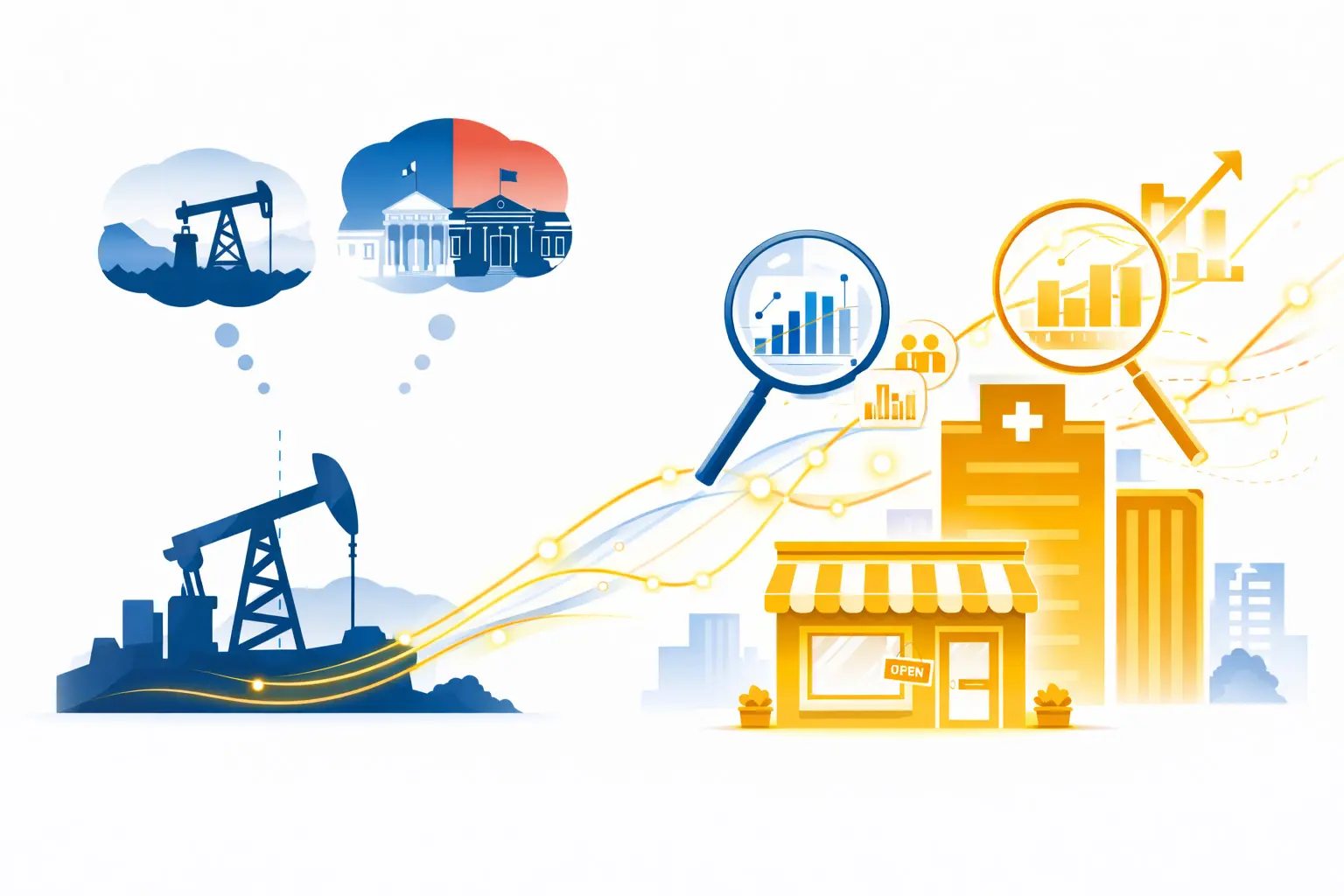 While I continued hearing the same explanations about
politics or oil and gas cycles, I began noticing something else happening
quietly in the background. Large organizations were still investing significant
money in Farmington. That immediately caught my attention, because companies
that operate at a national level rarely make expansion decisions based on
sentiment or local speculation about the economy. Their decisions are typically
grounded in data and long-term planning.
While I continued hearing the same explanations about
politics or oil and gas cycles, I began noticing something else happening
quietly in the background. Large organizations were still investing significant
money in Farmington. That immediately caught my attention, because companies
that operate at a national level rarely make expansion decisions based on
sentiment or local speculation about the economy. Their decisions are typically
grounded in data and long-term planning.
Opening a retail store or constructing a healthcare facility requires substantial commitment. Projects like these involve millions of dollars in capital investment, long-term real estate commitments, staffing plans, and operational infrastructure that may take years to fully develop. Before entering a new market, companies conduct extensive research to determine whether the location can support that level of investment. They study population trends, analyze regional spending patterns, evaluate transportation and infrastructure access, review demographic shifts, and model long-term economic projections.
In other words, they are reading signals.
While some people focus on the narrative surrounding the economy, large organizations tend to focus on what the data is telling them. When I began paying closer attention to those signals, I started to notice that many of them were pointing toward something different than the story I kept hearing repeated locally. Instead of decline, the data suggested something closer to opportunity.
EXAMPLES
Burlington’s Retail Expansion
One recent example illustrates this point clearly. Burlington, one of the fastest-growing off-price retailers in the United States, is opening a new 20,282-square-foot store in Plaza Farmington on East Main Street, scheduled to open in the spring of 2026. The location will occupy the former Joann Fabrics space and will sit alongside established national retailers such as TJ Maxx and Best Buy, placing it directly within one of Farmington’s most active retail corridors.
This decision is not happening in isolation. Burlington has been pursuing an aggressive national expansion strategy and has announced plans to open approximately 110 new stores during fiscal year 2026. As part of that strategy, the company has been transitioning toward smaller, more efficient store layouts designed to improve operational efficiency while still delivering the brand-name merchandise and discounted pricing that define the off-price retail model.
When a national retailer commits to opening a new location, it represents far more than simply filling a vacant building. Companies like Burlington conduct detailed analysis before entering a market, studying population trends, spending patterns, regional traffic flows, and long-term economic forecasts. Decisions of this scale are made because corporate analysts believe the surrounding market can support sustained business activity.
In other words, Burlington’s decision to invest in Farmington wasn’t based on optimism or speculation. It was based on signals coming from the market itself.
Exceptional Community Hospital
Retail is not the only sector investing in Farmington. Healthcare providers are making similar long-term commitments to the region as well.
In early 2026, Exceptional Community Hospital opened a new 21,000-square-foot facility in Farmington, representing an investment estimated between $18 million and $20 million. The project did not appear overnight. Exceptional Healthcare had identified Farmington as a potential expansion location as early as 2022, after evaluating a number of rural markets throughout the Southwest. After studying the area and its needs, the organization ultimately selected a 10-acre site on Pinon Frontage Road to develop the facility.
Several factors influenced that decision. One of the primary motivations was the need to expand healthcare access in rural communities where services can sometimes be limited. New Mexico has long faced challenges related to physician shortages, and facilities like this help address that gap while reducing the need for residents to travel long distances for emergency or diagnostic care.
The hospital itself was designed to provide a range of patient-centered services within a modern facility. It includes nine private patient rooms along with emergency care capabilities, laboratory services, and radiology equipment to support diagnostic needs. Beyond improving healthcare access for residents, the project also contributes to the local economy by creating more than 100 jobs across medical, technical, and administrative roles.
Like retail investment, healthcare expansion requires careful planning and extensive analysis. Organizations considering projects of this scale study population trends, regional healthcare demand, workforce availability, and long-term economic stability before committing millions of dollars to a new facility. The decision to build a hospital in Farmington reflects a level of confidence in the region’s long-term viability that extends well beyond short-term economic narratives.
A Quick Look Back
Farmington’s Economic Pivot
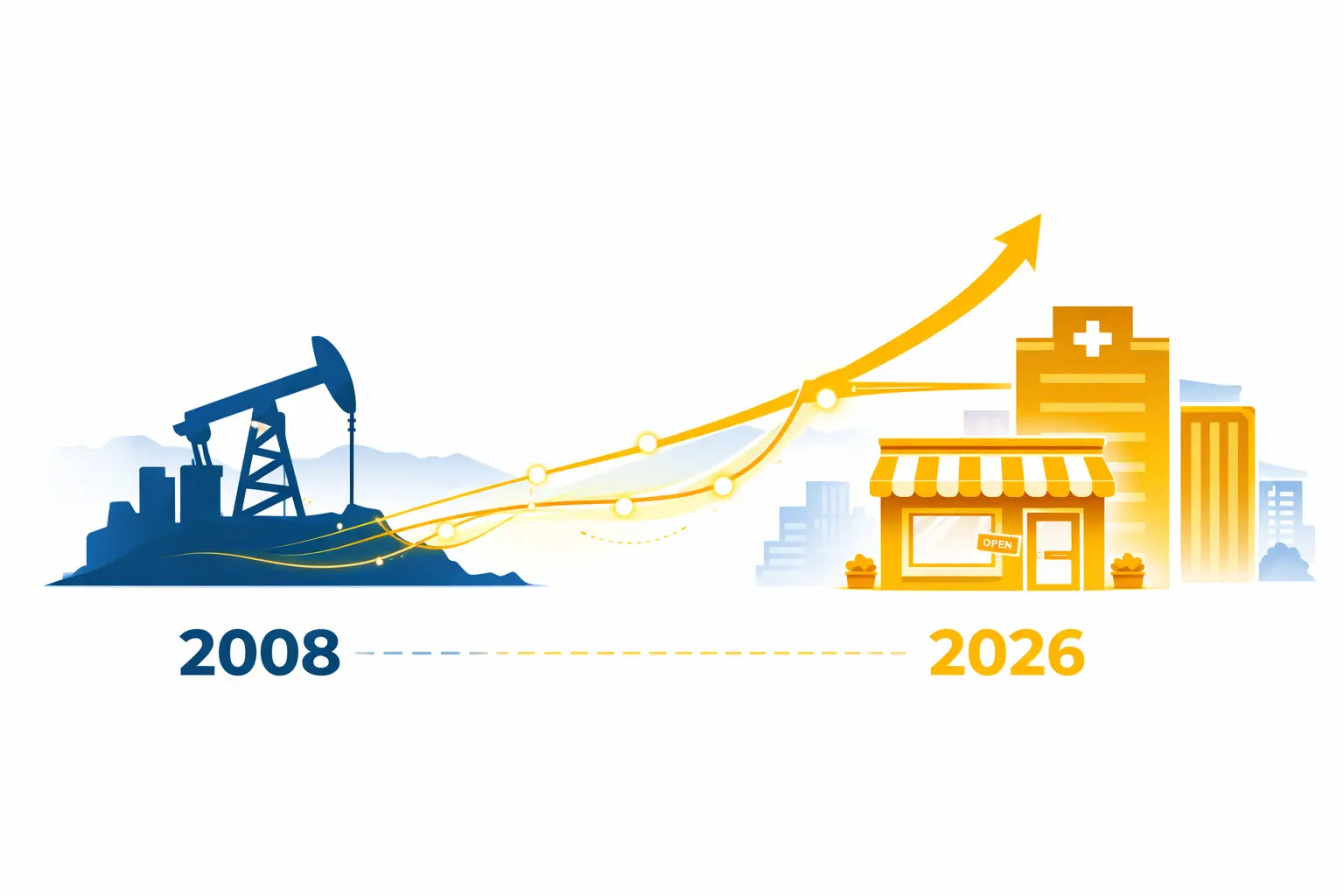 To understand why companies continue investing in Farmington
today, it helps to look at where our local economy came from.
To understand why companies continue investing in Farmington
today, it helps to look at where our local economy came from.
For decades, this region was defined by oil and gas activity in the San Juan Basin. That industry didn’t just shape the economy here – it shaped families, careers, and entire communities. My own family is part of that story. My grandfather, Herman McAnally, moved to Farmington to work in the industry and eventually retired from El Paso Natural Gas. My father, John Collins, returned here after his military service because of the opportunities the area offered. He spent much of my childhood working as an independent welder supporting oil and gas operations across the basin.
Like many families here, mine owes a great deal to that industry.
Because of that history, I have a deep respect for the role oil and gas played in building this community. It provided good jobs, supported local businesses, and helped establish Farmington as an economic center for the Four Corners region.
Around 2008 and 2009, however, the local industry experienced a major shift.
At the time, several factors were happening simultaneously. Natural gas prices were collapsing due to the rapid expansion of shale production in regions like the Marcellus and Bakken. At the same time, the State of New Mexico adopted the Pit Rule in 2008 under Governor Bill Richardson, requiring operators to line waste pits or move to closed-loop systems to prevent groundwater contamination.
Many local operators believed the rule significantly increased the cost of doing business in New Mexico, particularly in areas where companies had already been operating responsibly for years. It became a common sentiment locally that the new regulations made it easier for operators to shift their investments to places like Texas, North Dakota, or Pennsylvania.
Whether one agrees with that perspective or not, the reality is that drilling activity in the San Juan Basin declined sharply during that period. Major energy companies scaled back operations, and some left the region altogether.
For a community that had been closely tied to the energy sector for generations, it was a moment that forced Farmington to begin thinking differently about its economic future.
The Strategic Shift Toward Diversification
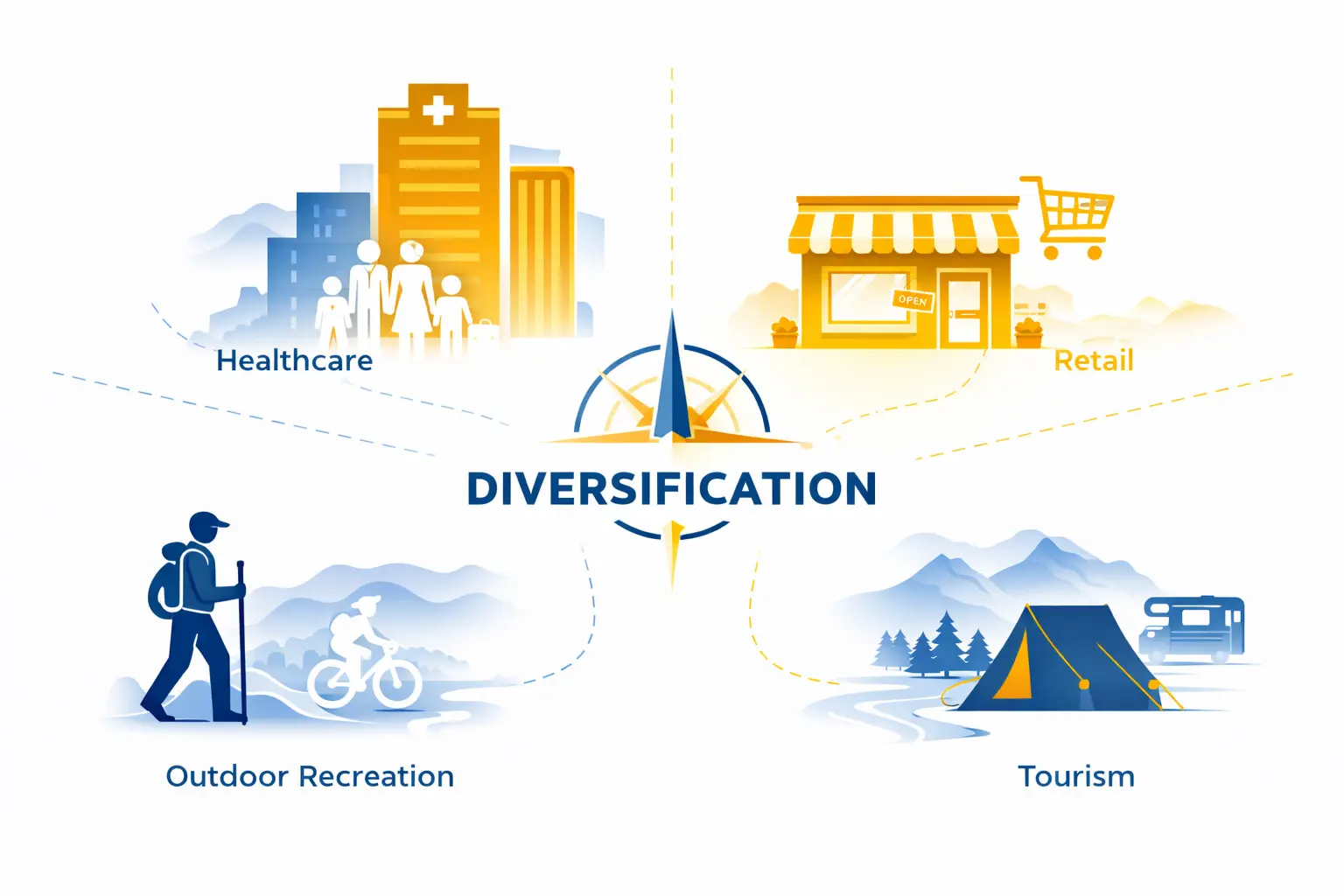 In the years that followed the downturn, Farmington faced an
important choice. The community could wait for the energy industry to return to
its previous level of dominance, or it could begin building a broader economic
foundation. Local leaders, business organizations, and community planners
ultimately chose the second path.
In the years that followed the downturn, Farmington faced an
important choice. The community could wait for the energy industry to return to
its previous level of dominance, or it could begin building a broader economic
foundation. Local leaders, business organizations, and community planners
ultimately chose the second path.
Rather than relying on a single industry to drive the entire economy, efforts began to focus on diversification. The goal was not to abandon the oil and gas industry – far from it – but to ensure the region had additional economic pillars that could support long-term stability. Over time, attention turned toward strengthening sectors such as tourism, outdoor recreation, healthcare, education, services, and retail development.
One example of this shift was the creation of initiatives like the Outdoor Recreation Industry Initiative (ORII), which recognized that the Four Corners region has unique geographic advantages. With access to rivers, desert landscapes, and mountain terrain within a relatively short drive, the area naturally lends itself to outdoor recreation. Programs like ORII helped position Farmington as a gateway for activities such as mountain biking, river sports, hiking, and off-road exploration.
The city also began leaning into its identity as a regional hub. Farmington serves a broad geographic area that stretches across parts of northwest New Mexico, southwest Colorado, northeast Arizona, and southeast Utah. Residents from these surrounding communities regularly travel to Farmington for shopping, healthcare services, higher education, entertainment, and other essential services.
Retail development along the East Main Street corridor and the Animas Valley Mall area reflects this regional draw. Over the past decade and a half, a steady stream of national brands has opened locations or expanded in Farmington. Stores and restaurants such as Michaels, ULTA Beauty, Texas Roadhouse, Ross Dress for Less, Freddy’s Frozen Custard & Steakburgers, and Whataburger have all established a presence in the area. More recently, Hobby Lobby relocated to a new 68,000-square-foot facility on East Main Street in 2026, and Burlington announced plans to open its new location at Plaza Farmington the same year.
These developments have occurred despite the broader decline of the traditional enclosed shopping mall model across the country. Retail activity remains a cornerstone of the local economy, supported by Farmington’s role as the primary commercial center for the surrounding Four Corners region.
At the same time, the city has invested heavily in strengthening community assets that support economic growth. More than $12 million has been directed toward downtown revitalization projects designed to establish an Arts and Cultural District, while a voter-approved quarter-percent tax has funded infrastructure improvements and community transformation efforts aimed at attracting new businesses and improving quality of life.
Efforts like the “Jolt Your Journey” campaign further reinforced this evolving identity, promoting Farmington not just as an energy town, but as a destination for outdoor recreation and regional tourism.
Taken together, these developments reflect a community that has been actively adapting to economic change – broadening its base while continuing to build on the strengths that made it a regional center in the first place.
The Data Behind the Signals
 While new investments and business openings offer visible
signs of economic activity, the underlying data tells an equally important
story. Recent financial data from the City of Farmington’s 2025 Annual
Financial Report provides a clearer picture of what has been happening
across multiple sectors of the local economy.
While new investments and business openings offer visible
signs of economic activity, the underlying data tells an equally important
story. Recent financial data from the City of Farmington’s 2025 Annual
Financial Report provides a clearer picture of what has been happening
across multiple sectors of the local economy.
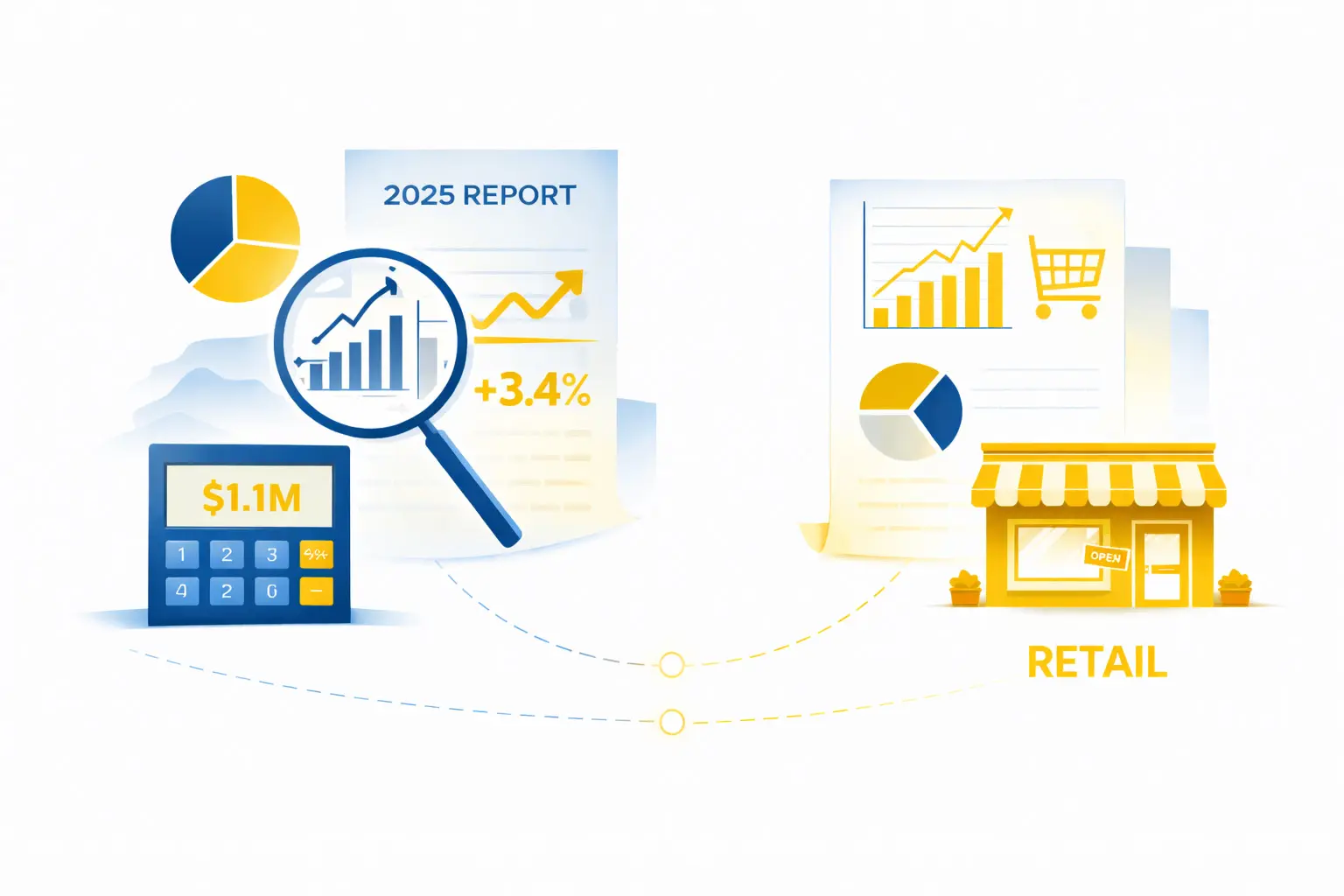
One of the most significant takeaways from the report is that retail continues to play a central role in Farmington’s economic structure. According to the report, the Retail Trade Sector increased by 3.4 percent during fiscal year 2025, representing approximately $1.1 million in additional revenue compared to the previous year. Even more telling is the fact that nearly 39.6 percent of the city’s Gross Receipts Tax revenue is derived from retail activity.
Those numbers reinforce something that many residents already understand intuitively. Farmington is not simply a local retail market serving its own population. It functions as a regional commercial center for the entire Four Corners area. People from surrounding communities regularly travel here to shop, dine, attend appointments, and access services that may not be available in their hometowns.
When viewed alongside the continued investment from national retailers and other businesses, the data from the city’s financial report helps confirm that Farmington’s position as a regional retail hub remains a defining characteristic of the local economy.
Growth in the Service Economy
 Retail is not the only area showing growth in Farmington’s
economy. The service sector has also experienced meaningful expansion,
reflecting the broader shift toward a more diversified economic base. According
to the City of Farmington’s 2025 Annual Financial Report, the Services Sector
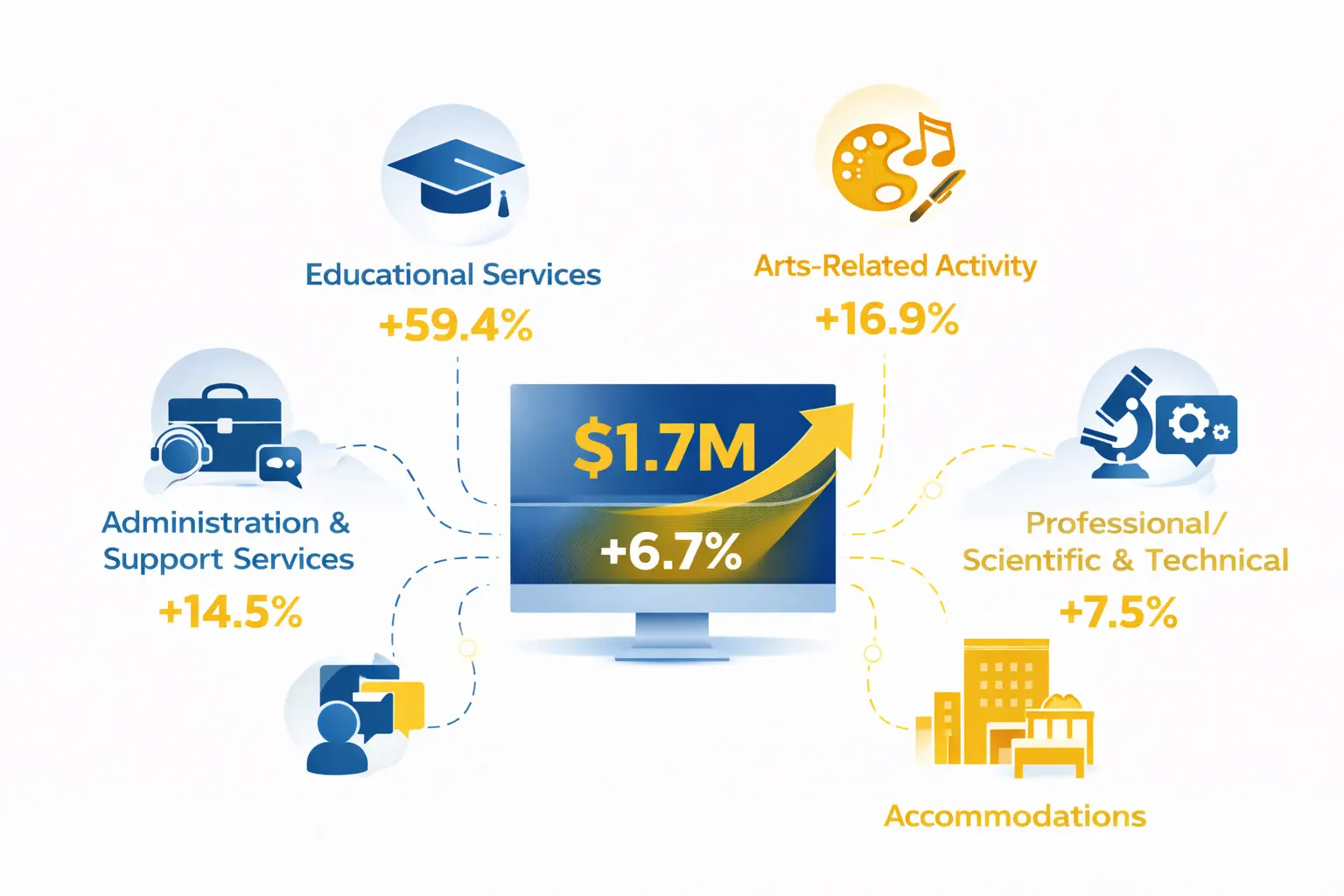
increased by $1.7 million, or 6.7 percent, during the fiscal year.
Retail is not the only area showing growth in Farmington’s
economy. The service sector has also experienced meaningful expansion,
reflecting the broader shift toward a more diversified economic base. According
to the City of Farmington’s 2025 Annual Financial Report, the Services Sector
increased by $1.7 million, or 6.7 percent, during the fiscal year.
Within that growth, several categories saw notable increases. Educational services showed the most dramatic jump, increasing by 59.4 percent, while arts-related activity grew by 16.9 percent. Administration and support services rose by 14.5 percent, and professional, scientific, and technical services increased by 7.5 percent. Accommodations – another sector often tied to tourism and regional travel – also grew by 9.4 percent during the same period.
When I look at numbers like these, they tell a familiar story about how regional hubs tend to evolve. Communities that serve a wider geographic area often see strong growth in service-based industries, because people from surrounding towns rely on them for education, professional services, healthcare, entertainment, and overnight travel. The increases reflected in these categories suggest that Farmington continues to function in exactly that role for the Four Corners region.
Growth Across Other Sectors
 Beyond retail and services, the city’s financial report
shows growth occurring across several additional sectors of the economy.
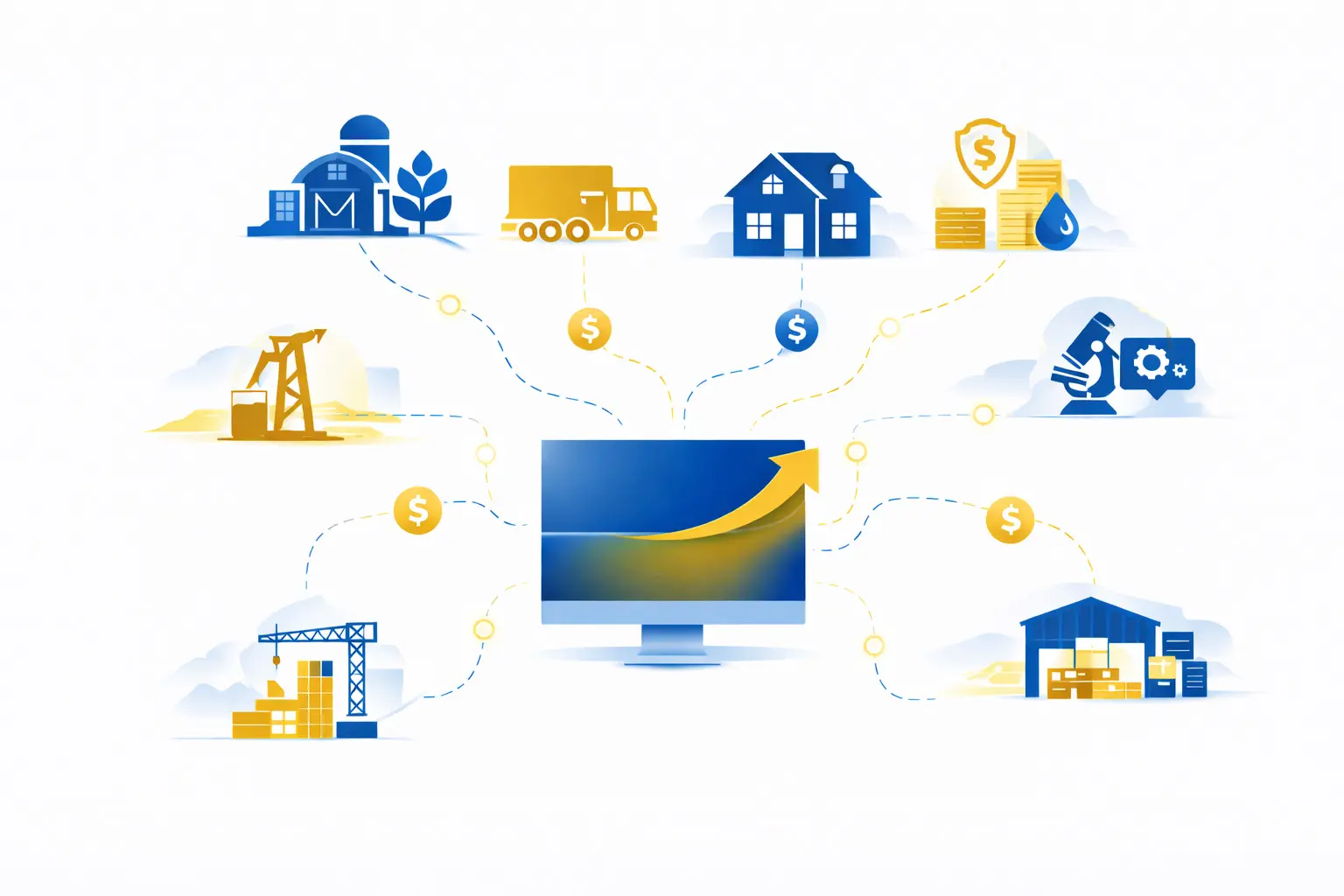
Agriculture activity increased by 30.9 percent, while transportation
grew by 14.8 percent. Real estate activity increased by 10.1 percent,
and the finance and insurance sector rose by 19.1 percent. Utilities
also saw growth, increasing by 9.7 percent during the same period.
Beyond retail and services, the city’s financial report
shows growth occurring across several additional sectors of the economy.
Agriculture activity increased by 30.9 percent, while transportation
grew by 14.8 percent. Real estate activity increased by 10.1 percent,
and the finance and insurance sector rose by 19.1 percent. Utilities
also saw growth, increasing by 9.7 percent during the same period.
Two other categories stand out as particularly noteworthy. Wholesale trade increased by 17.5 percent, and construction activity rose by 35.4 percent, representing nearly $1.9 million in additional activity. Construction growth, in particular, often reflects continued investment in housing, commercial space, and infrastructure, all of which support long-term economic expansion.
Interestingly, the mining sector – which includes oil and gas activity – also experienced a 42.1 percent increase, reflecting renewed activity within parts of the broader energy economy.
When I look at these numbers together, what stands out most is not the growth of any single industry. It’s the fact that growth is happening across many industries at once. Retail, services, construction, professional services, and even segments of energy are all contributing to the local economy.
Taken together, these numbers point to something important: Farmington’s economy is becoming more diversified across multiple sectors, rather than relying primarily on a single industry to drive growth.
What This Means for Local Businesses
 External factors like energy markets and national politics
absolutely influence local economies. Anyone who has lived in the Four Corners
region for any length of time understands that shifts in the energy industry
can ripple through the community in meaningful ways.
External factors like energy markets and national politics
absolutely influence local economies. Anyone who has lived in the Four Corners
region for any length of time understands that shifts in the energy industry
can ripple through the community in meaningful ways.
But over the years, I’ve noticed something else that often gets overlooked. Two businesses can operate under the exact same economic conditions and experience very different outcomes. One struggles to maintain momentum, while another continues to grow, expand, and invest in its future.
When I look more closely at those situations, the difference usually comes down to factors that exist inside the business itself. Strategy, positioning, visibility, and differentiation often play a much larger role than many people realize.
Throughout my career, I’ve had many conversations with business owners about the importance of having a basic online presence. In some cases, I was simply encouraging them to create a website. In other cases, I suggested something as simple and free as setting up a Google Business listing so customers could find them online.
Many owners disagreed with the idea at the time. Their perspective was often rooted in the same narratives I mentioned earlier: if the oil and gas industry picked back up, or if political conditions changed, their business would naturally return to where it once was.
What I’ve observed since then is that the market itself has changed.
Farmington today is not exactly the same community it was twenty or thirty years ago. More people have relocated here from other parts of the country. Many of those newcomers come from places where the first thing they do when looking for a business is search online. They expect to find a website. They expect to see reviews. They expect to see some form of digital presence that helps them understand who the business is and what it offers.
In earlier decades, many Farmington businesses didn’t have to worry about that. Word-of-mouth, long-standing relationships, and a smaller, more familiar customer base were often enough to keep things moving.
Today’s consumers operate differently. When businesses lack a visible online presence – whether that’s a website, reviews, or even a simple business listing – many potential customers simply never discover them in the first place.
From a strategic perspective, that kind of invisibility can quietly limit growth, regardless of what is happening in the broader economy.
And in my experience, it’s often these kinds of strategic gaps – rather than external economic forces – that determine which businesses struggle and which ones continue to grow.
The Advantage Local Businesses Still Have
 Despite the presence of national retailers, local businesses
still have meaningful advantages. In fact, when local businesses are
intentional about how they compete, they can often offer something that large
national chains simply cannot replicate.
Despite the presence of national retailers, local businesses
still have meaningful advantages. In fact, when local businesses are
intentional about how they compete, they can often offer something that large
national chains simply cannot replicate.
One of the most common mistakes I see is when local businesses try to compete with national retailers on price alone. That’s a difficult battle to win. Large retailers operate on massive economies of scale, centralized purchasing power, and nationwide distribution networks. Trying to outprice a national chain is rarely a sustainable strategy.
But price is not the only reason people choose where to shop.
Many customers are looking for something different – something that large retailers struggle to provide consistently. They want knowledgeable guidance, personal interaction, and a shopping experience that feels tailored to their needs rather than standardized for millions of customers.
Local businesses are uniquely positioned to provide exactly that.
They can build real relationships with their customers. They can understand the specific needs of their community. They can adapt quickly to changing market conditions and adjust their offerings without navigating layers of corporate decision-making. Most importantly, they can deliver a level of personalized service that makes customers feel understood and valued.
Another powerful advantage comes from specialization. Instead of trying to appeal to everyone, successful local businesses often focus on serving a specific type of customer extremely well.
A great example of this here in Farmington is Paradise Village, a business that has been serving the community since 1983. While big-box retailers eventually entered the local electronics market – Walmart opened in Farmington in the early 1990s – Paradise Village didn’t try to compete by becoming a discount electronics store.
Instead, they focused on expertise and high-end solutions. Today they specialize in car stereo systems, home audio, automation, and video installations, offering products and services that require deep knowledge and hands-on experience. Their knowledgeable staff works directly with customers to design systems that fit specific needs rather than simply selling a box off the shelf.
That kind of experience is difficult for a national retailer to replicate.
Not every customer is looking for the lowest-priced option, and not everyone wants to order something online and hope it works when it arrives. Many people still value speaking with someone who understands the product, understands the technology, and understands how to solve their specific problem.
Businesses like Paradise Village demonstrate that when a company defines its niche clearly and delivers an exceptional customer experience, it can thrive even as the retail landscape changes around it.
When thoughtful strategy and effective marketing support these kinds of strengths, local businesses can turn their community roots and specialized expertise into powerful competitive advantages.
The Strategic Question
 When conversations about business challenges come up, I
often hear the same question repeated in different ways: Why is the economy
hurting my business? It’s a natural question to ask, especially in a
community that has experienced real economic shifts over the years.
When conversations about business challenges come up, I
often hear the same question repeated in different ways: Why is the economy
hurting my business? It’s a natural question to ask, especially in a
community that has experienced real economic shifts over the years.
But from a strategic perspective, I’ve found that a different question tends to produce more useful answers.
Instead of asking why the economy is working against us, it can be far more productive to ask what the market itself might be trying to tell us. Markets constantly produce signals – through new investment, changing consumer behavior, emerging competitors, and shifts in spending patterns. The challenge is learning how to recognize those signals and interpret what they mean.
When businesses begin paying attention to those signals, they often discover opportunities that were present all along. Sometimes the opportunity lies in repositioning a product or service. Sometimes it involves improving visibility so customers can actually find the business. Other times it means redefining the customer experience in a way that better aligns with how people prefer to buy today.
The businesses that grow through periods of change are rarely the ones waiting for conditions to return to the way they used to be. More often, they are the ones watching carefully, adapting thoughtfully, and positioning themselves to serve the market that exists today.
Conclusion
Listening to the Market
 One thing Farmington has already proven over the past couple
of decades is its ability to adapt.
One thing Farmington has already proven over the past couple
of decades is its ability to adapt.
The transition from an economy driven primarily by oil and gas to one that includes strong retail, service, healthcare, tourism, and professional sectors did not happen overnight. It took time, investment, and a willingness from community leaders and organizations to recognize that the market was changing and that the region needed to evolve along with it.
That evolution is still happening today.
New businesses continue to open. National companies continue to invest. Service industries continue to expand. The data coming from the city’s financial reports reflects activity across multiple sectors of the local economy.
In other words, the signals are still there.
Markets are always moving. Consumer behavior shifts. Industries grow, decline, and reinvent themselves. Communities change as new residents arrive and new businesses emerge.
The businesses that tend to thrive in these kinds of environments are rarely the ones waiting for things to return to the way they once were. More often, they are the ones paying close attention to what the market is telling them, adjusting their strategy accordingly, and positioning themselves for the opportunities that are already taking shape.
Because in business, as in any market, the signals are always there for those willing to listen.
Ready to Listen to What the Market Is Saying?
If there is one lesson I’ve learned from working with businesses across many industries, it’s that the market is always communicating something. The challenge for most business owners isn’t a lack of opportunity – it’s having the time, perspective, and experience needed to interpret the signals correctly.
Sometimes the issue lies in strategy. A business may be positioned in a way that no longer reflects how customers make buying decisions today. Other times the challenge is visibility. A company may offer excellent products or services, but potential customers simply don’t know it exists because the business lacks a clear digital presence or consistent marketing strategy.
That’s where my work comes in.
 Through Strategic Horizons Consulting,
I help
business owners evaluate the operational and strategic side of their business –
identifying gaps, clarifying positioning, and building a plan that aligns the
company with the opportunities that already exist in the market.
https://www.strategichorizonsconsulting.com/
 Through Ken Collins Marketing,
I help businesses
execute the visibility side of that strategy – strengthening websites, refining
messaging, improving search visibility, and creating marketing systems that
help the right customers find them.
https://kencollinsmarketing.com/
Together, these two sides work under the same roof to solve a common problem: helping businesses move from simply reacting to the market to positioning themselves to thrive within it.
If you’re a business owner in the Four Corners region who feels like your company could be better positioned – strategically, operationally, or in how customers find and perceive you – I’m always willing to listen.
And sometimes, the right conversation is the first step toward seeing the opportunities that were there all along.